
Super 18650 Cell: Did You Just Buy a 7000mAh Cell on Amazon?
If you’ve searched for 18650 batteries on Amazon or Flipkart, you’ve probably seen listings claiming 6000mAh, 7000mAh, or even 9900mAh.
The higher the number, the more attractive the battery looks. After all, who wouldn’t want double the runtime for almost the same price?
But here’s the question:
Is it really possible to fit 7000mAh inside a standard 18650 cell?
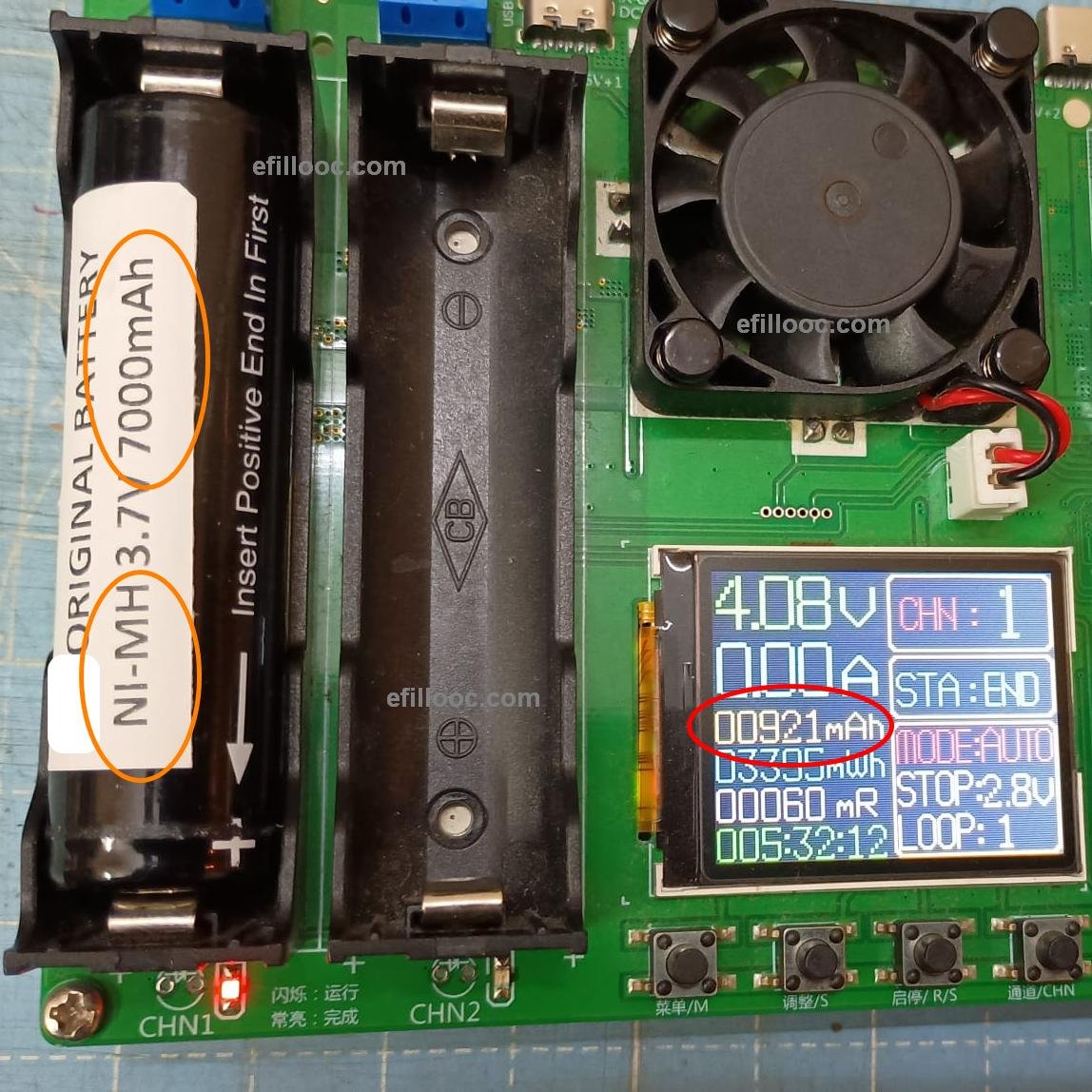
See our cell capacity test result for amazon bought 7000 mAh cell below
1. The “7000mAh 18650 Battery” High Capacity Claim
Online marketplaces are filled with batteries promising unbelievable capacities at unbelievable prices.
Most buyers compare only one specification:
Higher mAh = Better Battery?
That’s exactly what these listings rely on. Unfortunately, battery technology doesn’t work that way.
The capacity of a battery isn’t just a number that manufacturers can print on the label. It’s limited by chemistry, materials, and most importantly, physical size. Read on to find out.
2. Read the Dimensions First
Before reading the title, reviews, or even the brand, check the dimensions.
A standard 18650 cell measures:
- 18 mm diameter
- 65 mm length
That’s where the name 18650 comes from.
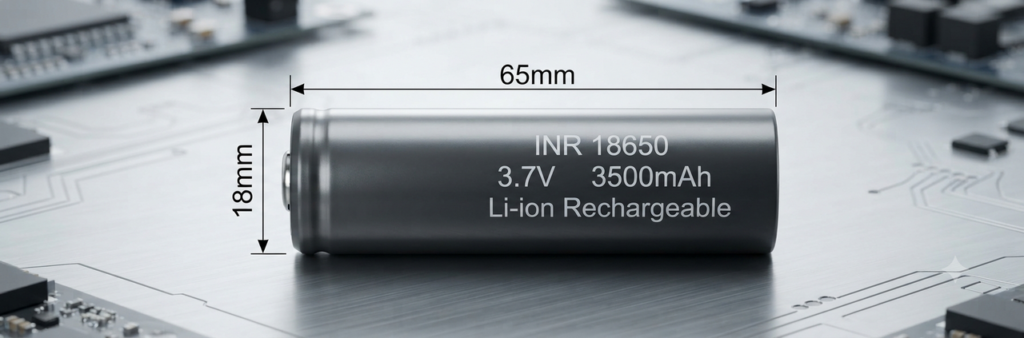
Once you know the size, you already know the realistic range of capacity the battery can have.
If two batteries are exactly the same size but one claims almost twice the capacity of the other, that should immediately make you pause.
3. What an 18650 Can Realistically Hold
Based on today’s commercially available lithium-ion technology, here’s a practical guideline:
- Below 1200-2000mAh – Older or budget cells
- 2200–2600mAh – Good quality cells that work well for most everyday applications
- 3000–4000mAh – High-quality commercial cells from manufacturers such as Samsung, LG, Panasonic, Murata (Sony), and Molicel
Now compare that with listings advertising:
- 6000mAh
- 7000mAh
- 9900mAh
For a single 18 × 65 mm cell, these numbers should immediately raise questions. Extraordinary claims require extraordinary evidence—and a product listing usually doesn’t provide it.
| Manufacturer | Model | Capacity (mAh) | CDR (A) | Chemistry | Best For |
|---|---|---|---|---|---|
| Highstar | HS18650 Series | 2,000–3,500 | 5–30 | NMC / LFP | Power tools, ESS, e-bikes |
| Panasonic | NCR18650GA | 3,450 | 10 | NCA | Laptops, EVs, flashlights |
| Samsung SDI | INR18650-30Q | 3,000 | 15 | NMC | Power tools, e-bikes |
| LG | INR18650-MJ1 | 3,500 | 10 | NMC | E-bikes, portable electronics |
| Sony (Murata) | US18650VTC6 | 3,000 | 30 | NMC | High-drain devices |
| Molicel | P26A | 2,600 | 25 | NMC | Power tools, drones |
| EVE | INR18650-33V | 3,300 | 10 | NMC | EVs, consumer electronics |
4. Physics Doesn’t Lie
Battery manufacturers are constantly improving energy density.
But those improvements happen gradually—not overnight.
If a genuine manufacturer suddenly developed a 7000mAh 18650 cell, it would be a major breakthrough for the entire battery industry.
Every electric vehicle manufacturer, laptop company, and power tool manufacturer would be using it. Instead, the highest-capacity commercial 18650 cells remain far below many marketplace claims.
You simply can’t pack 60–80% more energy into the same physical volume just by printing a bigger number on the wrapper.
Physics doesn’t care about marketing.
5. Red Flags in Amazon/Flipkart Listings
Whenever you’re shopping for lithium-ion cells, watch for these warning signs:
- Extremely high capacity at a surprisingly low price
- No manufacturer datasheet
- Generic or unfamiliar branding
- No information about continuous discharge current – missing datasheet
- Very few detailed reviews – Many buyers don’t even realize the true capacity of the cell, they are just happy it works.
- Reviews that only say “Good” or “Working fine” – usually fake!
This is what you will find on Amazon and Flipkart and may be other websites
“Original Ni-MH Rechargeable Battery, 3.7V, 7000mAh”
Ni-MH can never be 3.7V in a single cell package. Fake Listing!
Here is our test result using a 18650 cell capacity tester module
Printed capacity is 7000mAh but actual capacity measured is only 921mAH
NI-MH instead of Li-Ion, just fake labelling
6. Reviews Can Be Misleading
One of the biggest mistakes buyers make is trusting reviews like:
“Working perfectly.”
“Good battery.”
“Backup is nice.”
Here’s the problem:
A battery can successfully power your flashlight, speaker, or DIY project and still have nowhere near the advertised capacity.
Very few buyers own battery analyzers or capacity testers that can test a cell and give you the real capacity of the cell in mAh.
Most people simply charge the battery, see that it works, and leave a positive review.
That review confirms the battery functions. It does not confirm that the battery actually delivers 6000mAh or 7000mAh.
7. How to Buy Smarter
Instead of chasing the biggest number on the label, spend a few minutes checking these:
✔ Battery dimensions
✔ Voltage and chemistry
✔ Actual cell manufacturer
✔ Availability of a datasheet
✔ Independent reviews or capacity tests
✔ Reputable battery sellers instead of unknown marketplace brands
If the listing doesn’t clearly identify the actual cell manufacturer, ask yourself why?
Good manufacturers are usually proud to put their name on the product and back up their claims with all the details available data sheet.
8. Rule of Thumb
Whenever you see a listing claiming that a single 18 × 65 mm cell stores 6000mAh, 7000mAh—or even a full 4000mAh without identifying a reputable manufacturer—I assume the claim is unverified until proven otherwise.
That’s not because every listing is intentionally misleading.
It’s because battery specifications should be supported by evidence, not just attractive numbers printed on the label.
9. Final Takeaway
The next time you’re shopping for an 18650 battery, don’t let the largest number make the decision for you.
Look beyond the title.
Check the dimensions.
Check the manufacturer.
Check whether the specifications are technically realistic.
A battery that honestly delivers 2500–3500mAh is far more valuable than one claiming 7000mAh but delivering much less.
Remember: The biggest number on the label isn’t always the biggest value to consider.
Have you ever bought a battery that didn’t perform as advertised? We’d love to hear your experience in the comments.